Compare two listings side by side and the math looks simple. A four-bedroom colonial on a quarter-acre in Sewickley borough lists for $650,000. A four-bedroom colonial on five acres in Sewickley Heights lists for $2 million. Divide the difference by the extra 4.75 acres and you get a price per acre that feels almost reasonable, like land in the Heights is just expensive dirt.
It isn't. The acreage in Sewickley Heights comes with obligations that the borough parcel never had to think about, and a set of rules written nearly a century ago that keeps new supply from ever catching up. The premium buyers pay is not for grass. It's for who owns the road, who owns the sewer, and how few new five-acre lots are ever allowed to exist.
A Rule Written to Outlast the Estates That Inspired It
Sewickley Heights became a haven for Pittsburgh's industrial wealth after the Allegheny Country Club relocated there in 1902. The estates that followed were not modest: As You Like It, banker William Thaw's country home, was featured in early 1900s advertising for electric lighting. Henry Robinson Rea's estate, Farmhill, hosted Marie Curie in May 1921. B.F. Jones built a hundred-room mansion called Fairacres. These were working country places on hundreds of acres each, and by the mid-20th century, many of them had fallen into disrepair as heirs found the upkeep unsustainable.
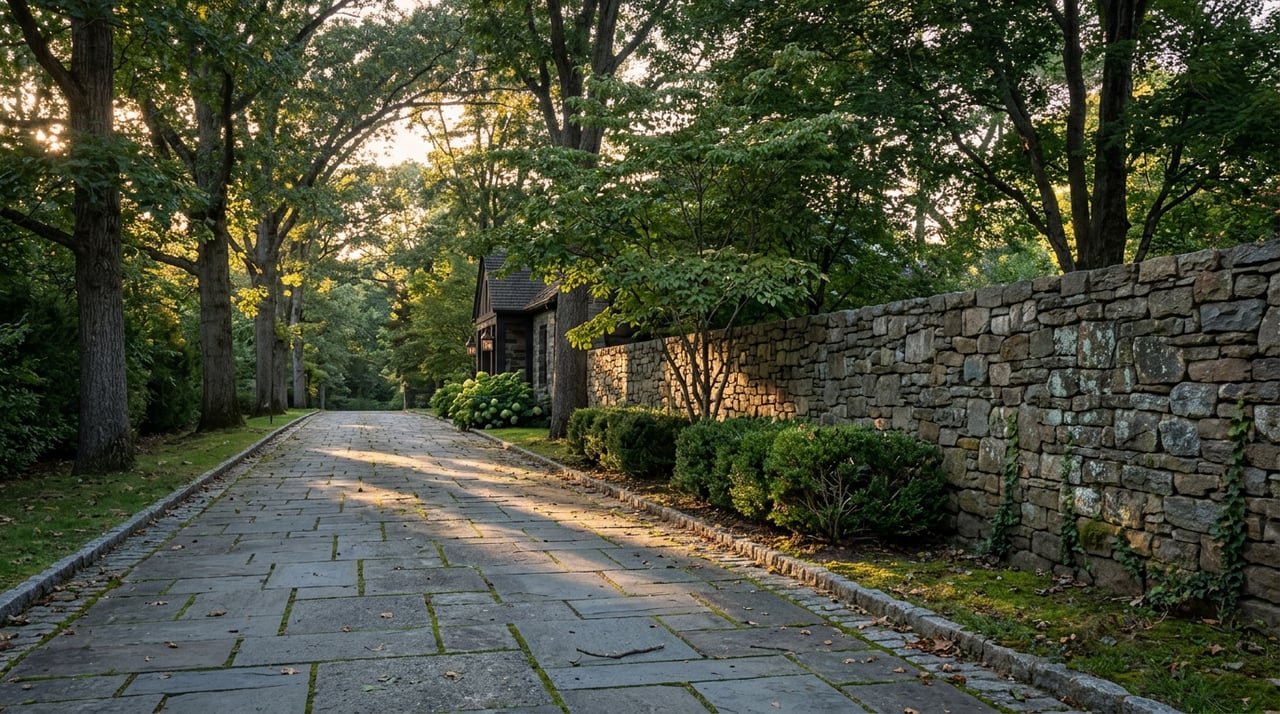
Rather than let those estates get carved into standard suburban lots, landowners and the newly formed borough council signed a Land Compact and Declaration of Restrictions establishing a five-acre minimum lot size, a rule that still governs the borough today. You can still see the old estate boundaries in the stone fences that mark cluster developments named after the original properties they replaced.
That five-acre floor is the first piece of the mechanism. It caps density permanently. It also means that when you buy land in Sewickley Heights, you are buying more than a homesite. You are buying into a system built to keep new supply scarce by design, not by accident of the market.
Two Ordinances Most Buyers Never Read Before They Tour a House
Here is the part that rarely comes up on a first showing. Sewickley Heights Borough maintains its own dedicated ordinances for private roads and on-lot sewage, separate from anything a borough or municipal buyer typically encounters.
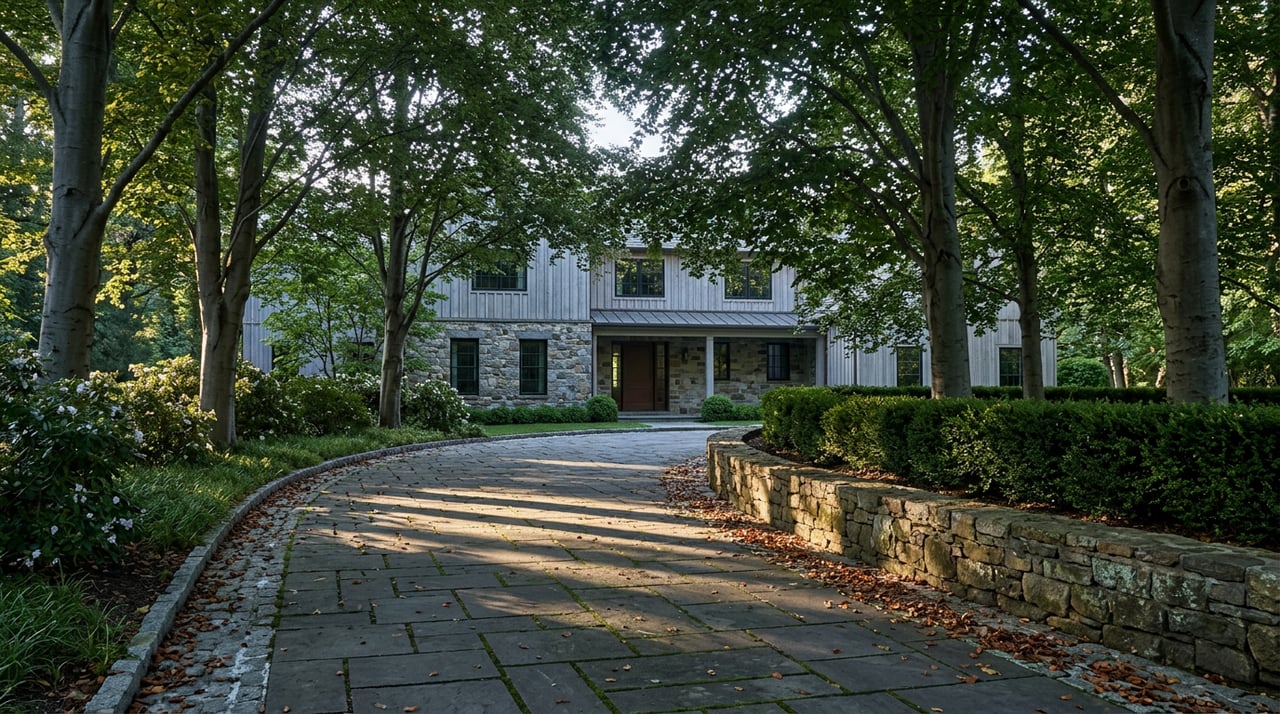
Ordinance No. 297 governs private roads, shared drives, and driveways. In practice, this means a meaningful share of Heights properties sit on roads that are not maintained by any government body. Snow removal, paving, and drainage repair are the responsibility of whoever owns the road, usually split among the handful of estates that share it through a private maintenance agreement recorded against the deed. That agreement outlives the sale. It transfers with the property, and it is worth reading in full before you fall in love with a long gravel drive through mature trees.
Ordinance No. 301 governs on-lot sewage systems. Much of Sewickley Heights was built before public sewer extended that far out, and a lot of it never got connected. That means septic, not municipal sewer, for a meaningful share of the housing stock. A working septic system is a routine part of country living. But it also means an inspection before closing is not optional the way it might be on a borough sewer hookup, and it means budgeting for pumping, periodic inspection, and eventually a drain field or tank replacement as part of ownership, not as an emergency line item nobody warned you about.
Neither of these facts shows up in a median price. Both of them explain part of why the median price is what it is.
What the Tax Bill Says About Who Pays for What
There is a small, telling wrinkle in the tax data. As of 2026, effective millage rates across the Sewickley corridor ran roughly as follows:
| Sub-area | Effective mill rate (2026) |
|---|---|
| Sewickley Heights | ~22.8 |
| Edgeworth | ~24.3 |
| Sewickley borough | ~24.5 |
Sewickley Heights carries the lowest local rate of the three, even though its home values are the highest by a wide margin. Part of that gap is simply valuation math, higher assessed values mean a lower rate raises comparable revenue. But part of it also reflects what the borough is not paying for centrally. A municipality that doesn't maintain your road and doesn't run your sewer line has a smaller public works budget to fund through property tax. The private road agreement and the on-lot septic system aren't just buyer inconveniences. They're the reason the public side of the ledger looks lighter than the price tag would suggest.
Why New Supply Almost Never Arrives
The five-acre minimum is only half the scarcity story. The other half is a decades-long, deliberate campaign to keep even the theoretical maximum from ever getting built.
Allegheny Land Trust, headquartered in Sewickley, has run what it calls the Northwest Allegheny Land Conservation Project since 1993, an effort explicitly aimed at protecting land across Bell Acres, Ross, Sewickley, Sewickley Heights and surrounding communities. Nearby, the trust's Audubon Greenway preserves 226 acres near the headwaters of Little Sewickley Creek, land that borders the Heights and will never become another cluster of estate lots.
When the Land Trust conducted its own visioning process for Sewickley Heights, it ran the numbers on how much undeveloped land could theoretically still be split into new five-acre parcels. One simple calculation, dividing all available acreage by the five-acre minimum, put the ceiling as high as 271 new lots. An earlier engineering estimate prepared for a comprehensive plan update put the number at 92. The two figures disagree by a factor of three, which tells you the real answer is less important than what both numbers have in common: neither the zoning nor the conservation activity is going away, and every acre the Trust protects makes both numbers smaller.
That is the second half of the mechanism. Sewickley Heights isn't expensive because it happens to have big lots. It's expensive because the community has spent ninety years making sure big lots stay rare, and a local nonprofit is actively shrinking the pool of land that could ever become more of them.
What This Means When You're Comparing an Acre in the Heights to One in the Borough
Recent listing data puts the Sewickley Heights median home price somewhere in the $1.6 million to $2.4 million range depending on the month and the data source, with homes there averaging around 73 days on market as of May 2026. Compare that to Sewickley borough, where a first-quarter 2026 breakdown of the corridor put the median closer to $695,000 with in-town homes typically moving within about 30 to 35 days.
That gap is not just square footage or acreage. It's the difference between buying into a system where the borough maintains your road and your sewer connection as part of your tax bill, and buying into a system where you and your neighbors on a shared private lane are the road authority, and where a failing drain field is your problem to solve and your problem to disclose.
None of this is a reason to avoid Sewickley Heights. The privacy, the tree canopy, the six hundred acres of borough parkland with its hiking and horse trails, and the history embedded in stone fences and estate names are exactly what draws people there in the first place. But if you're comparing that acre to one in the borough or in Edgeworth, price per acre is the wrong unit of comparison. The right question is who maintains the road, what's under the yard, and how the local math on land scarcity is likely to keep tilting in the years you plan to own the place.
FAQ
Is every home in Sewickley Heights on a private road? No, but a meaningful share are. The borough's private road ordinance exists because enough properties share drives or lanes that a formal maintenance framework was necessary. Ask directly and ask to see the recorded maintenance agreement before you make an offer.
Can a large Sewickley Heights lot be subdivided? Only down to the five-acre minimum, and only where an existing parcel has enough excess acreage and access to support it. The borough's own analysis found wide disagreement on how many new lots the remaining land could theoretically support, which is itself a sign the ceiling is low and getting lower.
Why do homes in Sewickley Heights sit on the market longer than in Sewickley borough? Larger price points and country properties in general tend to have a smaller buyer pool and a longer showing cycle everywhere in the Pittsburgh region, not just here. Add private road logistics and septic due diligence into a transaction and the timeline naturally extends further than a straightforward in-town sale.
If you're weighing a five-acre lot in Sewickley Heights against a smaller footprint closer to town, the acreage is the easy part to compare. The road agreement, the sewage system, and the zoning history behind both take a local read. Brian Teyssier has that read, and a conversation about what a specific Sewickley Heights property actually includes, beyond the acre count, is the place to start.