A seller in Fox Chapel does everything right. The lawn is cut, the photos are shot at golden hour, the price reflects the comps, and an offer comes in within the first two weeks. Then, ten days before closing, two things surface that never appeared in a single showing: a sewer inspector wants access to the inside of the house, and a lender wants a signed agreement about who plows the private road.
Neither of these shows up on a comparative market analysis. Neither shows up in a walkthrough. Both can push a closing date, and in Fox Chapel, both are more likely to matter than in most of the surrounding suburbs, because of how the borough built its infrastructure and how many of its largest homes are actually reached.
Two systems no listing photo shows
Curb appeal sells the house. What closes the house, on schedule, is what's underground and what's beside the driveway. Fox Chapel Borough requires a sewer lateral inspection before nearly every property transfer, and a meaningful share of the borough's larger estate homes sit on private roads that come with their own financing rules. Both are invisible until a transaction forces them into view, and both run on their own clocks, clocks that don't care about your settlement date.
The borough wants to see inside your sewer lateral
Fox Chapel Borough runs a formal dye-testing program tied directly to property sales. An application has to be filed with the borough at least seven days before the date of sale, and the test itself is not a quick look at a manhole cover. A borough inspector needs access inside the house to check whether sump pumps or floor drains have been illegally tied into the sanitary sewer. Downspouts have to be opened and flowing freely, or disconnected and properly capped below grade. A camera goes into the sewer lateral, water is poured through the downspouts and areaway drains, and dye is injected to confirm nothing is cross-connected. If the camera finds root intrusion, cracked pipe, or disconnected joints, the lateral has to be replaced from the house to the main before certification is issued.
The borough is not shy about the cost of being unprepared. Failing to have the plumbing ready when the inspector arrives can trigger a charge of $50 per hour per worker for the delay, and any return visit carries a minimum charge of $150. All of it has to be paid before the borough will issue the actual Document of Certification.
| Detail | Requirement |
|---|---|
| Application lead time | At least 7 days before date of sale |
| Access required | Inside the home, to check sump pumps and floor drains |
| Certification validity | 1 year from date of test |
| Re-test trigger | Required again at every subsequent sale |
| Unprepared-inspection fee | $50 per hour, per worker |
| Return-visit minimum | $150 |
Why the clock matters more than the test itself
Most sewer laterals pass. The real risk in Fox Chapel isn't failure, it's timing. The certification is only good for one year, and a new one is required every single time the property changes hands, regardless of how recently the last owner tested it. That means a house that sold eighteen months ago and is selling again now starts from zero on this requirement, even if nothing about the plumbing has changed.
If the lateral does show a crack or root intrusion, replacement is not a same-week fix. It means excavation, permitting through the borough, and a physical repair, all of which have to happen before the Document of Certification can be issued and the sale can close. A seller who waits until an offer is in hand to think about this is negotiating from a much weaker position than one who orders the test before the home is even listed. Getting ahead of it is one of the simplest ways to protect a closing date in this borough specifically, because almost no other municipality in the region runs a program quite like it.
The other line buyers don't ask about until the underwriter does
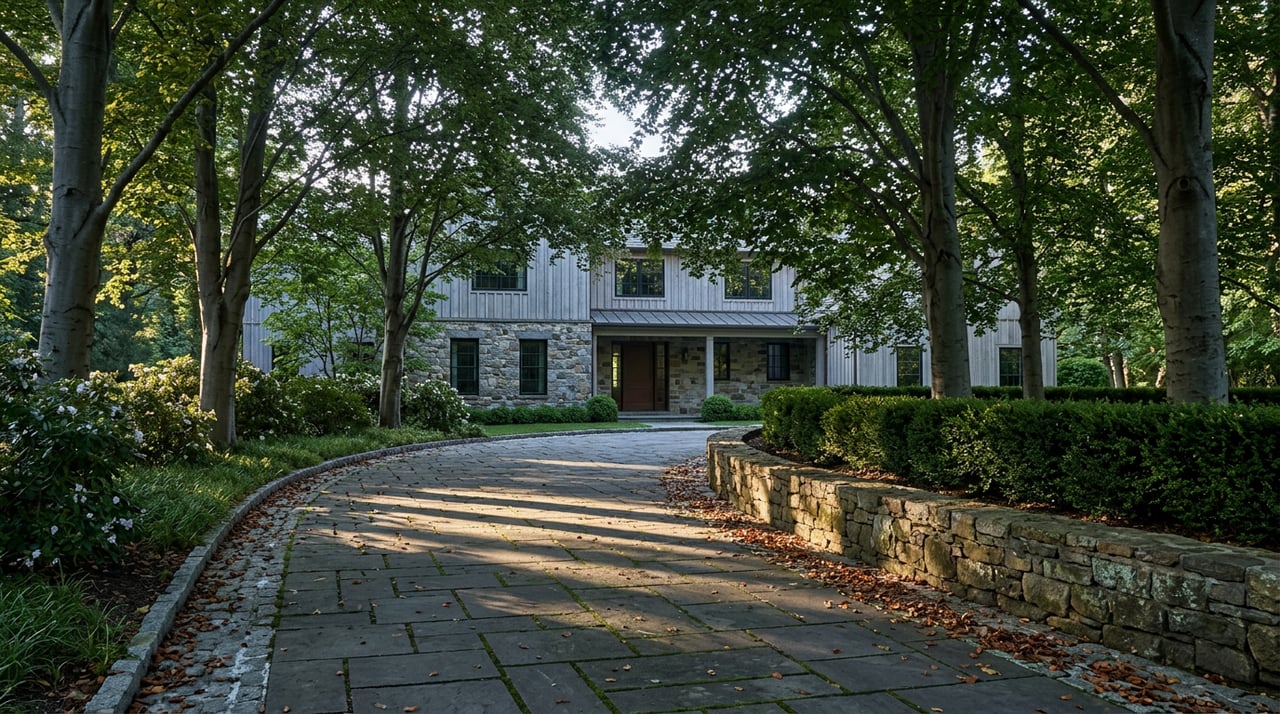
The second friction point sits outside the house entirely. A lot of Fox Chapel's larger properties, the kind on wooded multi-acre lots with long private drives, are accessed by private roads rather than borough-maintained streets. That's part of what gives the borough its sense of seclusion. It's also exactly the kind of detail that federally backed loan programs care about.
Fannie Mae, FHA, VA, and USDA financing all require a documented maintenance agreement for any private roadway serving the property, one that spells out who is responsible for repairs, what share each owner pays, and what happens if someone defaults. Without that agreement in place, the lender simply will not fund the loan, no matter how strong the buyer's credit or how clean the rest of the file looks.
The Pennsylvania Association of Realtors has been vocal about how often this catches people off guard statewide. PAR President Christopher Raad has described hearing "countless stories from members from around the state about closings being delayed or deals collapsing due to private roadway issues." One case documented by PAR involved a Centre County buyer whose underwriter required signatures from at least eighteen of twenty property owners sharing a private road before the loan would close, and the situation got more complicated when it came out, just a week before closing, that the local municipality had already abandoned the road. The deal was salvaged only because a notary was brought on site to gather the missing signatures in time.
That's an extreme version of the problem, but the same underlying mechanism applies to any private-road parcel, including the kind that make up a meaningful share of Fox Chapel's larger estate lots. Pennsylvania historically had no statutory fallback for properties without a written agreement, which is exactly why PAR pushed the legislature to amend the Private Road Act with House Bill 523, giving owners a baseline maintenance framework when no private agreement exists. That fallback helps, but it does not substitute for having an actual signed agreement on file before a lender goes looking for one. A statutory default is not the same thing as a document an underwriter can read and approve in an afternoon.
What to check before you list, not after you get an offer
For a seller, both of these issues share the same lesson: the paperwork that stalls a Fox Chapel closing almost never shows up during a showing, and almost always shows up during underwriting or inspection. A seller who orders the borough's dye test and confirms whether a private road agreement exists before listing is trading a small amount of upfront effort for a much cleaner path to closing on schedule. A buyer who asks these two questions before writing an offer, rather than after the lender flags them, avoids the exact scenario that turned a routine Centre County sale into a last-minute scramble for signatures.
For buyers looking at any larger Fox Chapel property, especially one on a long private drive, it's worth asking directly whether a maintenance agreement already exists and whether it's the kind a conventional or government-backed lender will accept. For anyone selling within the borough, the sewer certification is worth starting early enough that a failed test doesn't become a closing-week emergency.
FAQ
Does every home in the Fox Chapel area need the sewer dye test? The dye-testing requirement is a Fox Chapel Borough ordinance tied to properties on the borough's sanitary sewer system. It's tied to the sale itself, with a new application and test required each time the property transfers, not just once per owner.
How long does a passed certification last? The Document of Certification is valid for one year from the date of the original test. If the home doesn't sell again within that window, a new test is required at the next sale regardless of how the plumbing has held up.
What if my property is on a private road with no existing agreement? Pennsylvania's Private Road Act, as amended by House Bill 523, now provides a statutory fallback for maintenance responsibility when no written agreement exists. Lenders on federally backed loans still generally expect to see an actual signed agreement, so it's worth having one drafted well before a buyer's underwriter asks for it.
Fox Chapel's estate lots and wooded privacy are part of what makes the borough what it is, but that same character is exactly what puts sewer certifications and private road agreements in play more often here than in a typical Pittsburgh suburb. Getting ahead of both is the difference between a closing that runs on schedule and one that gets renegotiated in its final week. Brian Teyssier has walked Fox Chapel sellers and buyers through both of these processes long before they became a problem on someone else's closing calendar. Reach out for a free home valuation or to schedule a consultation before you list or write an offer.