"National Register nomination and listing is purely honorary. There are no restrictions on private property owners at all."
That is Sarah Quinn, the City of Pittsburgh's historic preservation planner, talking about Lawrenceville the week it landed on the National Register of Historic Places in 2019. It is also the sentence that would save a lot of Lawrenceville buyers and renovators a lot of confused phone calls to the city, if more people had read it.
Ask around and you will find plenty of Lawrenceville homeowners who believe the opposite: that because their rowhouse sits inside a nationally recognized historic district, they need city approval to change a window, repoint brick, or build up. That belief is understandable. It is also wrong, and knowing exactly why matters if you are about to buy a century-old rowhouse here, or you already own one and are staring at the ceiling wondering what is above it.
Two things share a name and almost nothing else
Pittsburgh has two entirely different systems that both get called a "historic district," and Lawrenceville is a clean case study in how differently they behave.
The first is a local historic district, created by city ordinance and overseen by the Historic Review Commission. Pittsburgh has 15 of these, including Mexican War Streets and Allegheny West on the North Side and Manchester, the city's largest local district and a pioneering site for community-led preservation. If your home is a contributing structure in one of these districts, exterior work, including windows, doors, siding, roofing, and additions, requires a Certificate of Appropriateness from the HRC before you can even pull a building permit. That review typically adds six to twelve weeks to a project timeline and can shape decisions down to roofline and window placement.
The second is the National Register of Historic Places, a federal program. This is what Lawrenceville has. The designation, granted in 2019, covers 916 acres from the Strip District to the 62nd Street Bridge and recognizes 3,217 contributing resources: rowhouses, commercial buildings, and former industrial properties built mostly between the 1830s and the early twentieth century. It is a real, meaningful recognition. It is not a review process. Nobody from the city signs off on your new siding.
Here is the comparison that actually matters if you are planning work on a Lawrenceville property:
| Lawrenceville (National Register) | Mexican War Streets / Allegheny West / Manchester (Local HRC District) | |
|---|---|---|
| Created by | Federal listing, added 2019 | City ordinance, overseen by the Historic Review Commission |
| Exterior approval required | No | Yes, a Certificate of Appropriateness before permitting |
| Typical added timeline | None | Six to twelve weeks |
| Financial upside | Eligibility for historic tax credits on contributing structures | Same eligibility, plus design consistency that can support resale in those specific districts |
| Who enforces it | Nobody, for private owners | Historic Review Commission staff and board |
That eligibility for historic tax credits is the one real lever the National Register designation hands you. If a contributing building undergoes a qualifying rehabilitation, the owner may be able to access historic tax credits tied to that work. It is worth a conversation with a tax professional and the city's preservation staff before you assume you qualify, but it is a genuine financial tool that a purely honorary listing still makes available.
What actually limits a Lawrenceville renovation
If the National Register listing is not the obstacle, something else is, and it is structural rather than bureaucratic.
Lawrenceville rowhouses are typically 16 to 20 feet wide with a shared wall on one or both sides. That geometry rules out lateral additions entirely. Homeowners here are left choosing between a rear addition, limited by how deep the lot runs, or building up. A licensed structural engineer needs to sign off on the existing framing before anyone designs a third floor, because the walls below have to be able to carry it. The 37th Street Residence is a local example of what a vertical build can look like on a tight infill lot when the structure supports it, and Lola 38th, five new-construction townhomes built by the Garfield-based mossArchitects near Butler Street, shows the same building-up logic applied to new construction on a hillside parcel rather than a rowhouse retrofit.
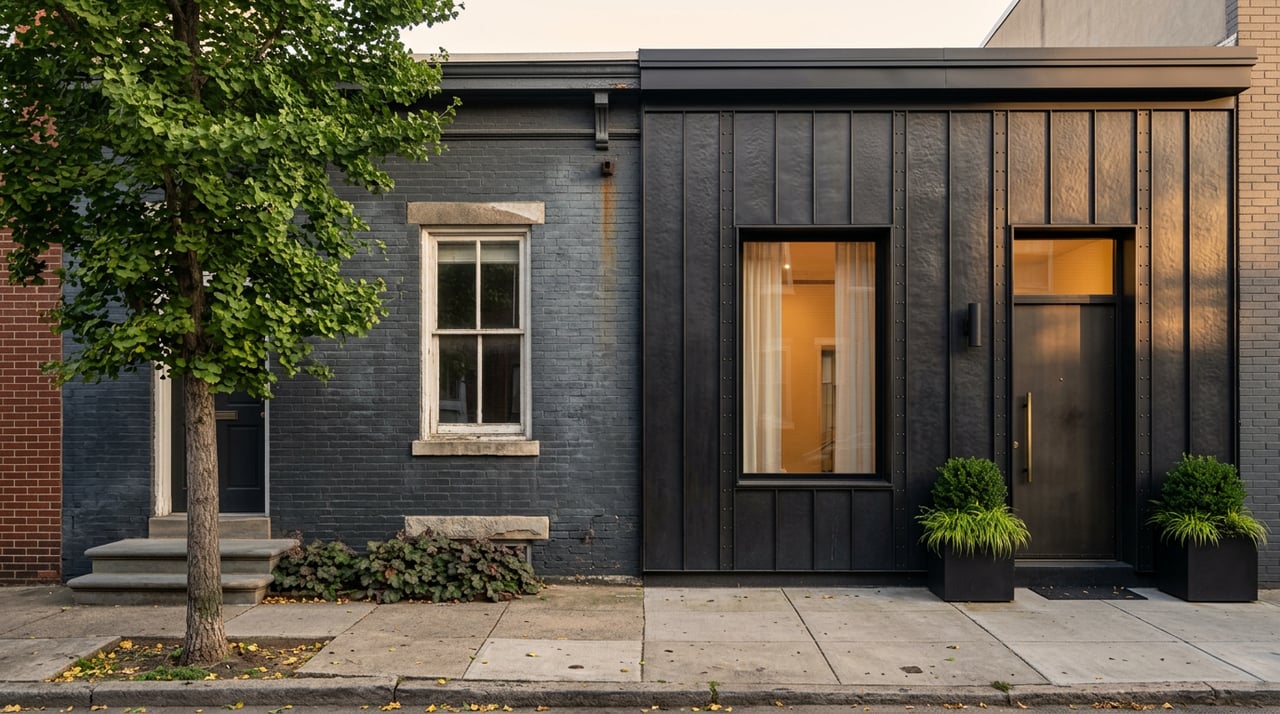
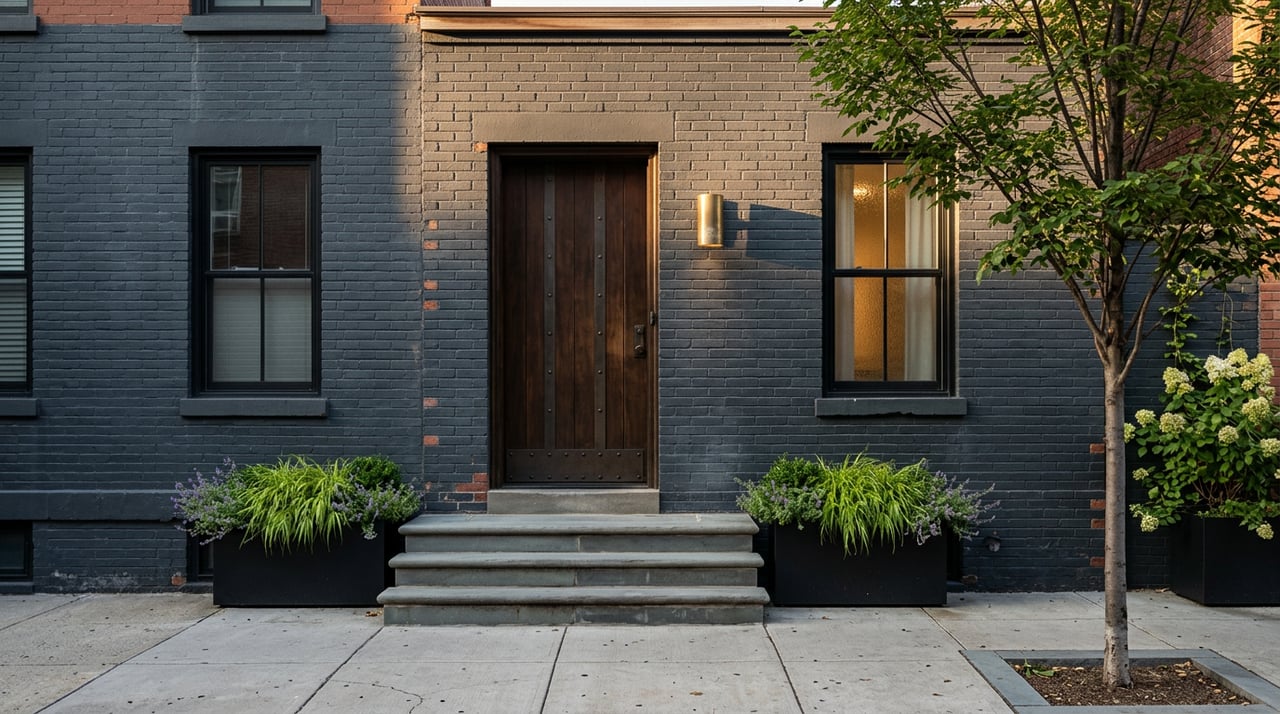
You can see the downstream effect of decades without design review just by walking the neighborhood. Rowhouses that once matched their neighbor now carry mismatched vinyl and stucco added at different points in the twentieth century, third-floor additions with rooflines that do not quite match the rest of the block, and siding choices that look like two different decisions made twenty years apart. None of that happened because anyone broke a rule. It happened because there was never a rule to break. Compare that to a home like the one Pittsburgh Magazine profiled on Carnegie Street, an 1881 Victorian rowhouse the Caplan family bought in 2021 and kept largely intact, including its finished third floor, now used as a dressing room but easily converted to a studio or expanded suite. Or the Mintwood Street rowhouse Joel Cook rehabbed himself, tearing out drop ceilings, exposing original joists, and rewiring the whole house top to bottom over the course of a long, hands-on renovation. Both routes, aggressive modernization and careful preservation, are legal in Lawrenceville for the same reason: nobody at the city is weighing in on either one.
One more disclosure fact worth knowing before you write an offer: any home built before 1978, which describes most of Lawrenceville's housing stock, triggers a federal lead paint disclosure requirement in the sale. That has nothing to do with the historic designation and everything to do with the age of the building itself.
A live variable this year
There is a second piece of timing worth knowing if you are pulling a permit in Lawrenceville in the second half of 2026. In March 2026, Mayor O'Connor announced the city is undertaking a full overhaul of its permitting process, including a rewrite of the zoning code to remove obsolete sections, simplify height and measurement requirements, and reduce the number of zoning districts. None of that changes what the National Register designation does or does not require, but it does mean the surrounding permit process itself is in motion. If you are early in planning a rear addition or a pop-top, it is worth checking with the city's Permits, Licenses and Inspections office on current timelines rather than assuming last year's numbers still hold.
Before you buy or start drawings
A few things to confirm before you get attached to a renovation plan for a Lawrenceville property:
- Whether the specific building has any individual landmark designation beyond the neighborhood-wide National Register listing, since individually designated structures can carry their own requirements
- Whether the lot width and party wall configuration rule out the addition you are picturing before you spend money on drawings
- Whether the rehabilitation you are planning qualifies as a use of historic tax credits, and whether that changes the economics of the project
- Whether the home was built before 1978 and what that means for your disclosure paperwork
- Where the city's permitting timeline actually stands right now, given the process changes underway this year
None of these questions have anything to do with whether Lawrenceville is a historic district. They have to do with the building in front of you, its walls, its age, and the specific paperwork that attaches to it. That is the distinction worth making before you make an offer, not after.
FAQ
Does Lawrenceville's historic designation mean I need approval to renovate my rowhouse? No. The 2019 National Register listing is honorary and carries no design review requirement for private owners. Local historic districts like Mexican War Streets and Allegheny West are the ones that require Historic Review Commission approval before permitting.
Can I still get historic tax credits on a Lawrenceville property? Contributing structures within the National Register district may be eligible for historic tax credits on a qualifying rehabilitation. Confirm eligibility with a tax professional and the city's preservation staff before you finalize a renovation budget.
What is the biggest practical limit on adding space to a Lawrenceville rowhouse? Lot width and party walls. Most rowhouses run 16 to 20 feet wide with shared walls, which eliminates lateral additions and pushes homeowners toward rear additions or a structurally engineered third-floor build.
Does the 2026 permitting overhaul affect Lawrenceville specifically? It affects the citywide process, including zoning code simplification, rather than Lawrenceville's historic status. If you are planning to pull a permit this year, check current timelines with the city rather than relying on past processing times.
If you are weighing a Lawrenceville rowhouse purchase with a renovation in mind, or trying to figure out what a property's history actually allows before you write an offer, Brian Teyssier can walk the specifics with you. Reach out for a free home valuation or to schedule a consultation.